
 by
by 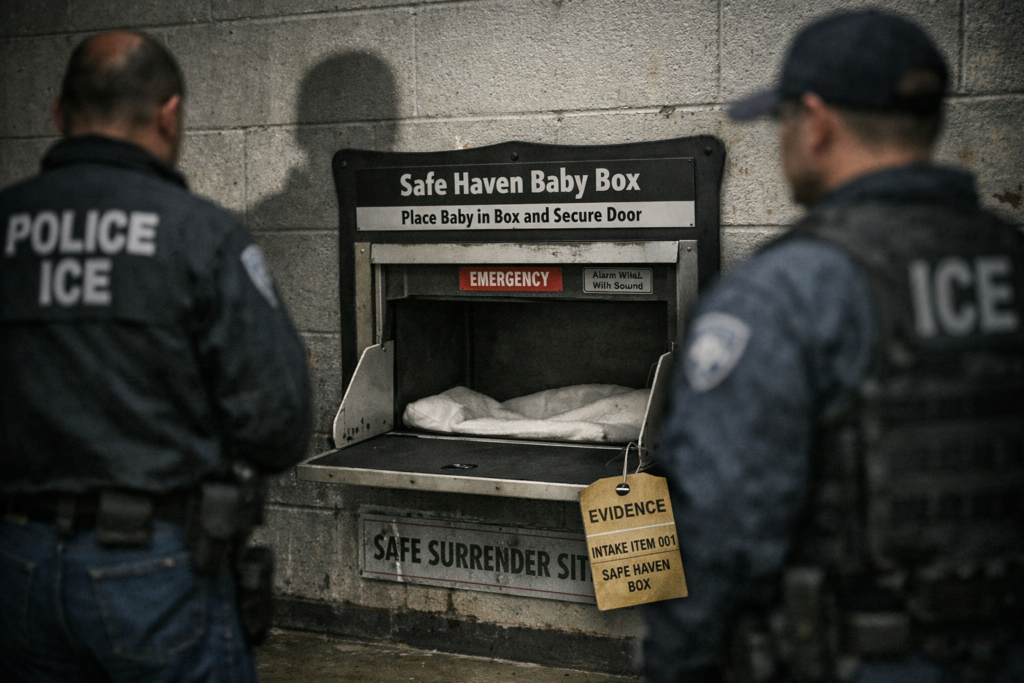
A couple of weeks ago the New York Times published a curious op-ed by the paper’s chief legal affairs correspondent Adam Loptak, Under Trump’s Approach to Birthright Citizenship, ‘Foundlings’ Given Up for Adoption Could Be Stateless. And by “foundlings,” Liptak is clear he’s talking about babies “relinquished ” under state safe haven laws.
Now we all know that international adoptees in the US (and by extension all adoptees if push comes to shove) are endangered by the Trump administration’s obsession with citizenship and proof thereof in their attempt to gut the 14th Amendment. The citizenship status of “foundlings” had vaguely crossed my mind, but I’d not really thought about it until this piece appeared. The article is short and behind a paywall, but here is the meat:
Under Mr. Trump’s executive order, abandoned infants would not be entitled to citizenship under the 14th Amendment unless they were able to produce evidence that at least one of their biological parents was a U.S. citizen or lawful permanent resident. That would seem to leave parents seeking to invoke safe haven laws with a terrible choice, one that could leave their children stateless.
A 1952 law addressed this problem, though it is not clear whether it would survive a ruling in favor of Mr. Trump’s plan. The law conferred citizenship on children of “unknown parentage” under the age of 5 who were found in the United States unless it was proved, before they turned 21, that they had not been born in the United States.
Of course, there is no way to prove the citizenship status of parents under state secrecy laws.
I remember a news story years ago, out of North Carolina, I believe, about a woman calling a local Safe Haven advocate to help her surrender her baby under the state ‘s SH law. She was a migrant worker in the country “illegally,” and was afraid to seek any kind of assistance–to even use a personal handover at a fire station or hospital out of fear of arrest and deportation. The story detailed the transfer to the SH volunteer who would do it for her. It was a sad sad story, yet neither the volunteer nor the reporter commented that this was a case of forced abandonment. Instead, they congratulated the volunteer and the mother for “doing the right thing” as if this baby were in imminent danger of abandonment or death. The baby is now an adult, and I’d love to know how they feel about it–or if they even know their origin story.
Annual Los Angeles County ICAN reports include cases of parents safe-havening their newborns out of fear of detainment and deportation. Many of these ICAN stories were collected years before ICE dragging “suspects” off the street, state-mandated family separation, detention centers, Alligator Alley, and collective deportations were everyday policy and practice.
Babies then and now are given up anonymously, not because they are unwanted and unloved or headed for dumpsters and ditches, but out of fear of the US Government. And now there could be an additional danger: statelessness.
And where, pray tell, would stateless babies be deported to? Sent to El Salvador or Libya? Would they be fed into the domestic or international black market via state and private agencies or just plain bad actors? Trafficked to “desperate” adopters or pedophiles? Since they are already invisible through the secret child distribution system, especially if procured through baby abandonment boxes, it would be easy–and profitable.
This possible turnabout is “amusing” in the way that only SHBB can be amusing, since the 2021 attempt to pass baby box legislation in Kansas referred to the devices as Baby Refuge Boxes.
******
At the end of 2024, Human Rights Watch reported that under the first Trump administration, more than 4,600 children were forcibly separated at border crossings from their families and thrown into public and private “systems.” As many as 1,360 of them, years later, were unaccounted for. According to Human Rights Watch:
CBP [ US Customs and Border Protection did not tell the Office of Refugee Resettlement which children it had separated at the border, and CBP systems did not link separated children’s records with those of their parents. A federal judge observed, in fact, that the government kept better records of property than of the children in its care. As a result, the policy’s true scope has only become apparent after years of efforts to identify, locate, and reunite separated children and their parents.
The above scenario and the threat of stateless SH babies, is similar: forced abandonment.
I do not believe that Mrs Kelsey or anyone involved in the SHBB movement supports this narrative. The deportation of safe-havened, stateless babies seems far-fetched, but so do a lot of other things that are real in the US today.
******
Thanks to Valiere Lemiuex for this tip.

Leave a Reply